
My ears are full!
Befriending silence and joining the minority of the quiet

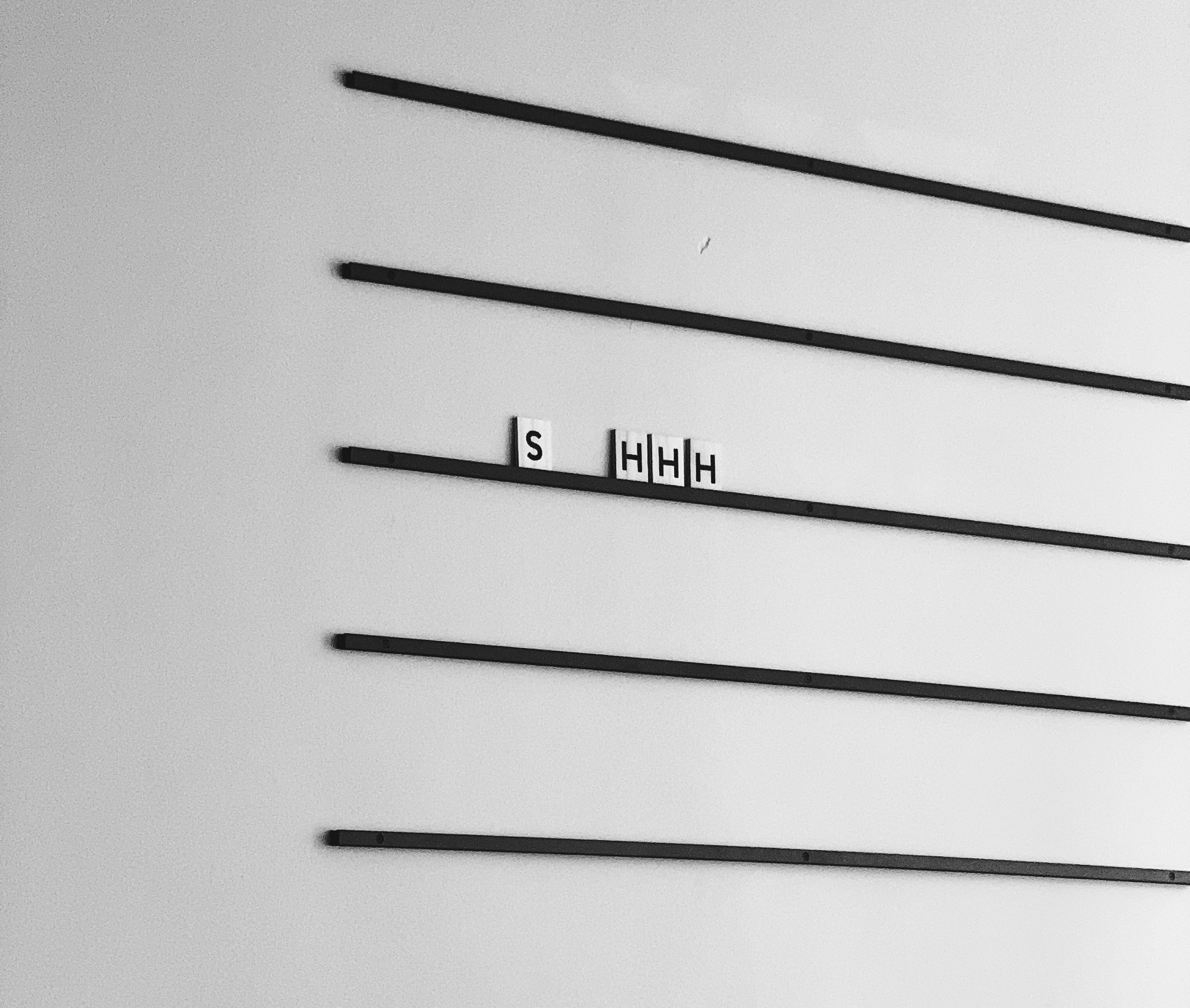
First off, apologies are in order. I’ve been so very absent from Why not be a saint. You have subscribed, some of you graciously have paid subscriptions, all with the hope of reading … something. But it’s been radio silence. Forgive me.
It has been a really busy summer - renovations at my church parlayed much time into a construction management role, controversy in my church denomination pulled me into conversations and presentations, and, personally, I’ve been in a space with God I’m not sure how to describe. Not a dark night of the soul, maybe more like a mid-summer’s night of the soul, like a summer evening in northern latitudes: dim, dusky but the light on the horizon never quite goes out. I’m doing all the things I know are good but left longing to know and experience God.
More than anything, however, my absence is found in a compulsion to silence in the face of a world that is changed and disturbed. This might seem strange since this at odds with unending material to reflect on and write about: the ongoing horror of Gaza, Russian aggression, the endless folly of US politics, assassinations, trade and tariff wars, and so much more.
Trailing all these events, predictably, has been the wake of spin, pundit opinion, rant, increasingly violent rhetoric, commentary, and entertainment posing as news. Factor in AI slop, the torrent of disinformation and performative verbal gibberish, and all of it chastened any inclination or capacity towards speech. The shock and awe bluster of it all - everything, everywhere, all the time - felt smothering, and to add one more word seemed an offense. The last thing needed was one more hot take, another diatribe, op-ed or Substack post.
We all see and sense the travail of our world which begs for some engagement. But in the fury and tumult Eugene Peterson notes the “strategic necessity that Christians deliberately ally themselves with the minority of the quiet.”1 Every latest event demands a response, and yet silence is hardly ever considered as a most worthy and suitable response. Why don’t we enter into silence?
Weightier than words
When our children were much younger, they were chatty little ones. Unlimited queries into the nature of things, endless needs to be filled, all of it expressed with staccato intensity. At times we had to quiet our kids by saying, “I can’t hear you, my ears are full.”
About 15 years ago, with my ears full of my own and others words, weary of my meagre prayer life, needing to know God in a new way, I registered for an eight-day silent retreat. I looked forward to gearing down and finding a quiet space, but another part of me was a little freaked out, pretty sure I would end up running down the halls of the retreat center desecrating something holy. After a brief introduction to the retreat, to other participants, and a simple service of prayer, we entered the silence.
A more pious prayer would’ve been “God, meet me here” but mine felt more like “God, help me!” That prayer was spot on because, as Aryana Petrosky writes, “a silent retreat is like being swallowed by a whale - plucked from the direction you thought you were going, then immersed into untethered, disorienting time.”2
Those eight days ended up being one of the most transformative spiritual experiences in my life but it was not easy. The trouble with silence is that every other sound seems amped up, and most of it coming from inside myself. Silence quickly revealed in me an ugly, judgmental underbelly — I remember noticing another retreat participant and found myself quickly disliking him. Why? We’re not saying anything, so what could he have done? What’s wrong was not him but me.
Silence is the frost heave of the soul. The cold contraction of earth regularly hoists to the surface rocks and stones. Silence has this same habit, lifting subterranean rubble to the surface of our lives that we need to confess and clear out. No wonder we fill our lives with noise and busyness.
But silence also unearths treasures, “forces concealed in quiet.”3 I’ve learned much from silence, growing in attentiveness to God’s presence. The many clamouring distractions are emptied, leaving space for God’s Spirit to fill. Sister Joan Chittister notes that in silence “you can listen for the voice of God within you calling you to the more of life that you have smothered for so long that the voice has become barely audible.”4 In silence, we make room for mystery, for something more expansive than our own thoughts can contain.
There’s a wisdom found in the stillness. Out of the quiet God’s word reveals itself. The word in print was always there, of course, but the Living Word shakes off ink and steps out of the page to encounter. A clarity and conviction emerges from stillness that stiffens the spine of a wise and courageous response.
One of the hidden gems quiet offers is its posture of indifference. Amidst all the struggles that clamour for a response, some dismiss silence as complicity. Perhaps, but not always. Sometimes silence is resistance, a refusal to participate in the folly and madness of the situation. I think of Jesus in John 8, when a woman caught in adultery is dragged before him. It’s a kangaroo court and a verbal trap set for Jesus. John notes that Jesus says nothing but writes in the dirt. He refuses to engage on the terms set before him and remains silent, poking at the dust. Jesus was living the wisdom to “not answer a fool according to his folly, or you yourself will be just like him.” (Proverbs 26:4) How much of the culture war folly — often dressed up as Christian — is because we have become participants in a foolishness framed by others?
On leaving the retreat centre at the end of those eight days, completely unplugged not having read any news, watched a TV, checked email, scrolled social media feeds, or talked on the phone, I surfaced more connected to life than ever. The world had carried on with all its flurry and worry and yet re-entering that world from my silent exile I felt like a person buoyed and ready with good news.
Finding quiet
But where can you find silence? Maybe by trekking to remote deserts or secluded forests but even there you won’t find absolute silence. The ear is part of an exquisitely sensitive auditory system, transmitting the din of sound that is everywhere - barking dogs, the hum of HVAC systems, pinging, beeping devices, whistling nose breath, gurgling digestive juices, clattering dish-ware, subway cars rumbling beneath, shuffling shoes, along with the guaranteed cough that interrupts most quiet.
I’m not sure complete silence is even desirable. Sound and hearing are part of a good creation. An environment absent of any sound would be a strikingly barren and lifeless thing. Excessive noise is damaging to our health but might there be such a thing as silence pollution?
“There is no silence,” writes Kyle David Bennett, “there is only the practicing of silence.”5 Monasteries are probably the most practiced places of silence. Part of the rule of life in many monastic communities is extended periods of quiet. St. Benedict, who wrote the most well-known rule of life, calls monks to the practice of silence but through an indirect path. The rule of Benedict does not command silence as it does restraint of speech (taciturnitas). I find that distinction incredibly helpful. A quieted heart is the fruit of a restrained tongue or keyboard. The practice of silence is less a zen-like absolute silence and more about creating an auditory oasis by muzzling my inner blowhard.
Yet even here wisdom is needed. Early in my life I wrestled with a variety of personal insecurities and remember coming across a proverb that became a misguided strategy to manage those insecurities: “Even a fool who keeps silent is considered wise; when he closes his lips, he is deemed intelligent.” (Proverbs 17:28) What a brilliant tactic for the imposter I believed I was — just shut your mouth to feign a false intelligence. The proverb remains true but my application of it was more cowardice than wisdom.
It’s something I still struggle with, probably part of why I’ve been silent for the past while. Not wanting you to realize there’s really nothing behind the curtain and then quietly unsubscribe. Silence then is malformed and misdirected, not a love neighbour but a self-absorbed shield.
Beyond misapplied proverbs, there are times when silence is far from wisdom because words have the power to heal and bring life. Speech is necessary to love your neighbour: when a friend needs a heartening word, when a struggling couple needs someone to name the destructive pattern obvious to all except them, a stranger who needs directions, in defending the vulnerable, to name injustice, and hopefully in a thoughtful Substack newsletter.
I love the paradoxical wisdom in Proverbs 26, setting side-by-side both the call to silence and to speech. In v. 4 we’re told to “not answer a fool according to his folly, or you yourself will be just like him.” And in the very next verse the wise learn to “answer a fool according to his folly, or he will be wise in his own eyes.” It’s both, and wisdom will tell us when its one and not the other.
Wise to steward our words
The book of Proverbs glistens with wisdom on words, reminding of their power to heal and build or destroy and distort. When we speak, things happen. Relationships form or fracture; hope is kindled or extinguished. A spouse learns they are beloved or have become barriers to our happiness. The power of words shapes reality, and so Proverbs returns again and again to quiet and restraint. “When words are many, transgression is not lacking, but the prudent are restrained in speech.” (Proverbs 10:19)
This runs precisely opposite to the reigning conventional wisdom. We are a culture of authenticity, after all, where you must speak your truth. Robert Bellah called it expressive individualism, where your authentic self must be shared and declared. To suppress that is a personal affront, both dishonest and one of the few remaining sins. Proverbs, however, calls such restraint wisdom.
Henri Nouwen gets us curious about what’s underneath this expressive individualism: “let us at least raise the question of whether our lavish ways of sharing are not more compulsive than virtuous.”6 Not everything needs to be spoken and not every moment is the right time to say it. There’s a wisdom in withholding, in waiting, in letting silence have its way in us before we rush to add our commentary.
We need the paideia of Proverbs before weighing in on every controversy or adding our voice to every conversation. “The heart of the righteous ponders how to answer, but the mouth of the wicked pours out evil things.”(Proverbs 15:28).
Just look at this string of pearls:
“The mouth of the righteous is a fountain of life, but the mouth of the wicked conceals violence.” Proverbs 10:11
“The words of the reckless pierce like swords, but the tongue of the wise brings healing. Proverbs 12:18
“The Lord detests lying lips, but he delights in people who are trustworthy.” Proverbs 12:22
“Those who guard their lips preserve their lives, but those who speak rashly will come to ruin. Proverbs 13:3
“A gentle answer turns away wrath, but a harsh word stirs up anger. Proverbs 15:1
“The soothing tongue is a tree of life, but a perverse tongue crushes the spirit..” Proverbs 15:4
“Gracious words are like a honeycomb, sweetness to the soul and health to the body.” Proverbs 16:24
“The tongue has the power of life and death, and those who love it will eat its fruit.” Proverbs 18:21
It makes me wonder, to paraphrase Annie Dillard, does anyone have the foggiest idea what sort of power we so blithely invoke with our words? To give life or kill; to build up or demolish a character; to bring peace or incite violence. Or, as I suspect, does no one believe a word of it? On our keyboards and devices, in our political gatherings and online forums, we are like children playing on the floor with their chemistry sets, mixing up a batch of TNT to blow up a reputation, a life, a community, a nation.
A chastened voice is no wallflower timidity. There is wisdom in the minority of the quiet; something good and healthy is going on there.
In the end, isn’t love the guiding constraint for our speech? 1 Corinthians 13 is our north star for how we engage online and what we post, how we confront differences, how we address our authorities, chat with strangers, and commune with our children: with patience, showing kindness to all as kin, drained of any envy, without a need to parade any self-importance, absent of useless anxiety, only with intent to honour, put in service to others, always with an eye for the best.
Voices poised, patient, and prepared to bless.
The Harpooners Calm, Christianity Today, Nov. 1985.
The Silent Revival, Comment Magazine, Winter 2023.
William Meredith, Chinese Banyan.
The Monastic Heart.
Practices of Love.
The Way of the Heart.